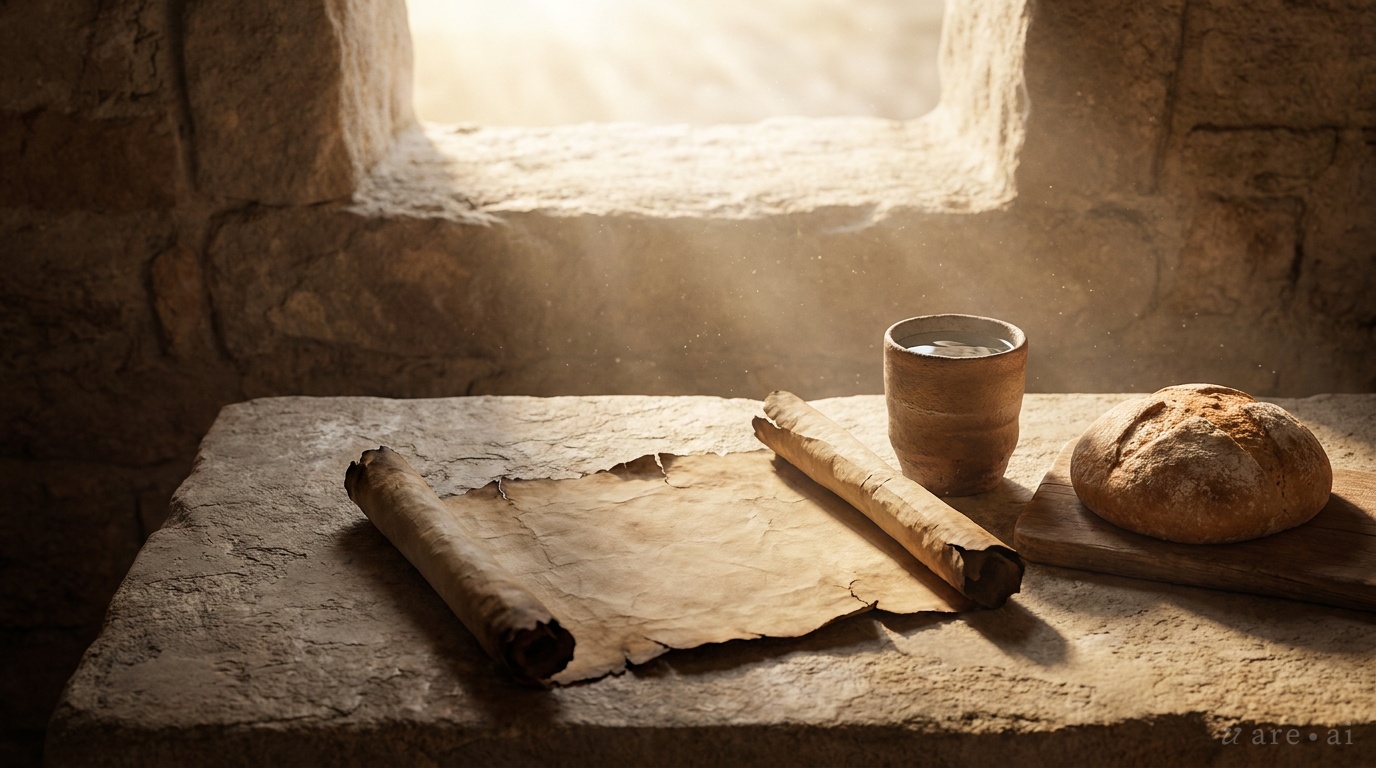
Submit vs. Surrender
This study tackles one of the most misunderstood distinctions in the Christian walk — the difference between submission and surrender. Many believers submit outwardly while holding back the heart. This study exposes that difference and calls the reader to the deeper, more complete act of full surrender to God.
▶ Listen to this teaching
Submit vs. Surrender
Study Outline
- Defining the Terms — What does submit mean in the original Greek and Hebrew? What does surrender mean? Why the difference matters spiritually and practically.
- The Problem with Partial Obedience — Biblical examples of those who submitted but did not surrender: Saul, Ananias and Sapphira, the rich young ruler.
- What Full Surrender Looks Like — Jesus in Gethsemane as the ultimate model. Paul's complete abandonment to God's will.
- The Freedom of Surrender — The paradox: surrender feels like loss but produces freedom. How complete surrender breaks the power of sin, fear, and self-reliance.
- The Covenant of Surrender — A structured personal covenant. Reflection questions. A closing prayer of complete surrender.
Introduction
The words "submit" and "surrender" are often used interchangeably in Christian teaching, but the Bible reveals important distinctions. James 4:7 commands us to "Submit yourselves therefore to God. Resist the devil, and he will flee from you." The Greek word hupotassō (Strong's G5293) carries the idea of arranging oneself under authority — a relational, structural act of obedience. Surrender, by contrast, is captured in the Hebrew word natan (Strong's H5414), which means to voluntarily give, yield, or hand something over into another's control — as seen in 2 Chronicles 30:8.
Key Verses
James 4:7 (KJV): Submit yourselves therefore to God. Resist the devil, and he will flee from you.
2 Chronicles 30:8 (KJV): Now be ye not stiffnecked, as your fathers were, but yield yourselves unto the LORD, and enter into his sanctuary, which he hath sanctified for ever: and serve the LORD your God, that the fierceness of his wrath may turn away from you.
Psalm 37:5 (KJV): Commit thy way unto the LORD; trust also in him; and he shall bring it to pass.
Word Study
Submit (Greek: hupotassō) - to arrange under, to subordinate, to subject oneself.
Surrender / Yield (Hebrew: natan, Strong's H5414) — to give, put, place, or hand over. It implies a voluntary act of placing something into another's control. In the New Testament, the parallel Greek word is paradidōmi (Strong's G3860) — to hand over, deliver up, or commit fully. It appears in Romans 8:32: "He that spared not his own Son, but delivered him up (paradidōmi) for us all" — the Father's act of ultimate surrender on our behalf.
The Biblical Difference
Submission and surrender are related but distinct concepts in Scripture. Submission often refers to arranging oneself under authority or in relationships, as in Ephesians 5:21 where we are to submit to one another in the fear of God. Surrender, on the other hand, carries the idea of voluntarily yielding or handing over one's will, desires, or control to God, as seen in the Hebrew concept of natan.
Submission in Scripture
James 4:7 - Submit yourselves therefore to God. Resist the devil, and he will flee from you.
Ephesians 5:21-22 - Submitting yourselves one to another in the fear of God. Wives, submit yourselves unto your own husbands, as unto the Lord.
1 Peter 2:13 - Submit yourselves to every ordinance of man for the Lord's sake.
Surrender or Yielding in Scripture
2 Chronicles 30:8 - Now be ye not stiffnecked, as your fathers were, but yield yourselves unto the LORD.
Romans 12:1 - I beseech you therefore, brethren, by the mercies of God, that ye present your bodies a living sacrifice, holy, acceptable unto God, which is your reasonable service.
Matthew 26:39 - And he went a little further, and fell on his face, and prayed, saying, O my Father, if it be possible, let this cup pass from me: nevertheless not as I will, but as thou wilt.
Practical Application
Submission is often the starting point of obedience in our relationships and to God's commands. True surrender goes deeper, involving the voluntary yielding of our entire will and future to God, even when it costs us something. Jesus modeled perfect surrender in Gethsemane while still submitting to the Father's will.
Reflection Questions
1. In what areas of your life are you submitting to God but struggling to fully surrender?
2. How does Jesus' prayer in Gethsemane illustrate the difference between submission and surrender?
3. What practical step can you take this week to move from mere submission to full surrender in one area of your life?
Comparison Table
| Aspect | Submission | Surrender |
| Core Meaning | To arrange oneself under authority or in relationships | To voluntarily yield or hand over one's will, desires, or control to God |
| Biblical Language | Greek: hupotassō (to arrange under, subordinate) | Hebrew: natan (to give, put, place, or yield) |
| Primary Focus | Obedience in relationships and to God's commands | Consecration of the whole self, including future and will |
| Key Example | Wives submitting to husbands (Ephesians 5:22); submitting to authorities (1 Peter 2:13) | Jesus in Gethsemane: 'Not as I will, but as thou wilt' (Matthew 26:39) |
| Spiritual Outcome | Order, harmony, and protection in relationships | Deep intimacy with God, transformation, and peace |
Deeper Biblical Insights
Submission is often the first step of obedience. It brings structure and order, whether in marriage, church, or civil authority. The Greek word hupotassō literally means to arrange under, like soldiers lining up under a commander. This creates harmony and protection.
Surrender goes deeper than mere obedience. The Hebrew natan implies a voluntary act of placing something into another's hands. It is not forced but chosen, often at personal cost. Jesus demonstrated this in Gethsemane, where He submitted to the Father's will while fully surrendering His own desires.
Romans 12:1 calls us to present our bodies as a living sacrifice. This is the language of surrender, not just submission. Submission follows commands; surrender offers the whole self as an act of worship.
How They Work Together
True spiritual growth requires both. We begin with submission to God's Word and authority, but the deeper work of surrender transforms our hearts. Submission without surrender can become legalism; surrender without submission can become emotionalism. Together, they produce mature faith that both obeys and trusts.
Reflection and Application
Take time this week to examine one area of your life. Are you submitting to God's commands in that area, or have you truly surrendered your will and future to Him? Ask the Holy Spirit to show you the difference and lead you into deeper surrender.
Does Everyone Move from Submission to Surrender?
While the ideal teaching often moves from submission to surrender, Scripture shows that God in His mercy meets people where they are. Circumstances can bring some directly to the deeper work of surrender without the usual progression.
Biblical Examples of Direct Surrender
The thief on the cross had no time for a gradual process. In his dying moments he simply cried out, "Lord, remember me when thou comest into thy kingdom," and Jesus answered him that very day (Luke 23:42-43).
Paul on the Damascus road was struck down and immediately surrendered with the words, "Lord, what wilt thou have me to do?" (Acts 9:6). In these cases, the surrender itself then led to a life of ongoing submission and growth.
The Common Path
At the same time, Scripture presents the more common path of beginning with submission and moving into deeper surrender, as we see in Romans 12:1-2 where we are first called to present our bodies and then experience the renewing of our minds.
In both patterns, the goal is the same: a transformed heart that both obeys and trusts God fully.
Spirit of Prophecy
The warfare against self is the greatest battle that was ever fought. The yielding of self, surrendering all to the will of God, requires a struggle; but the soul must submit to God before it can be renewed in holiness.
— Ellen G. White, Steps to Christ, p. 43
Many are inquiring, 'How am I to make the surrender of myself to God?' You desire to give yourself to Him, but you are weak in moral power, in slavery to doubt, and controlled by the habits of your life of sin. Your promises and resolutions are like ropes of sand. You cannot control your thoughts, your impulses, your affections. The knowledge of your broken promises and forfeited pledges weakens your confidence in your own sincerity, and causes you to feel that God cannot accept you; but you need not despair. What you need to understand is the true force of the will.
— Ellen G. White, Steps to Christ, p. 47
The submission of the will is represented as plucking out the eye or cutting off the hand. Often it seems to cost us much to yield the will to God; but it is safe to submit all to His keeping. Nothing is really lost that is surrendered to God.
— Ellen G. White, The Desire of Ages, p. 267
Memory Verse
I beseech you therefore, brethren, by the mercies of God, that ye present your bodies a living sacrifice, holy, acceptable unto God, which is your reasonable service.
— Romans 12:1 (KJV)
Closing Prayer
Use this framework to close your personal study or group session:
Father, we confess that we have often submitted to Your Word with our minds while withholding our wills from Your hand. Today we choose not merely to obey, but to surrender. Like Jesus in Gethsemane, we say: not as we will, but as Thou wilt. Take what we have been holding back. Transform submission into surrender, and surrender into worship. In the name of Jesus Christ, Amen.